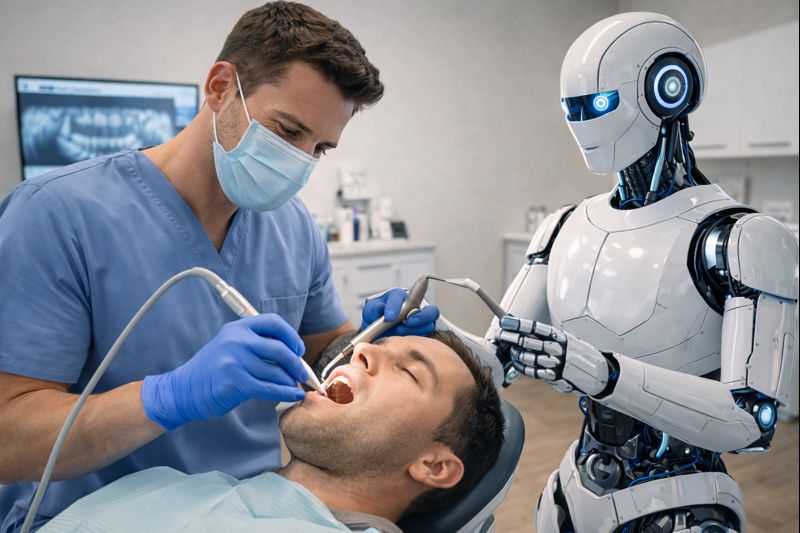
AI Receptionist for Dental Offices: Don’t Miss Implant Clients After Hours
High-intent dental patients seeking dental implants often research after hours. Missing these high-value calls results in significant revenue loss. An AI receptionist ensures 24/7 professional answering, instant lead qualification, and real-time scheduling directly into the practice’s management system. By providing immediate assistance, dental offices can capture implant cases that previously went to voicemail, boosting conversion rates by 49–70%.

If you want the big-picture framework first, this complete guide to AI receptionists for service businesses explains how 24/7 answering, qualification, and scheduling fit together—then you can apply it to dental implants specifically.
Why do dental offices lose implant cases after hours?
The honest truth about dental marketing is that your highest-value leads—those seeking dental implants—often do their research in the evenings after work. If they call your Colorado Springs office at 7:00 PM and reach a generic voicemail, many will hang up without leaving a message.
A big reason callers disappear is the “voicemail barrier”—they don’t want to leave a message and wait. This breakdown of why voicemail is losing bookings explains what modern callers do instead, and why instant answering is often the difference between “scheduled” and “lost lead.”
What we’ve learned from hundreds of local service business owners is that voicemail is where leads go to die. Patients in need of restorative work, when they lost a tooth, want an immediate sense of resolution. An AI receptionist acts as an always-on virtual assistant that answers every call quickly, ensuring your practice never “closes” virtually. This instant response stops the patient from clicking back to Google to find a competitor who is available.
How can an AI receptionist qualify high-value implant leads?
Not every caller is a good candidate for implants, and your front desk staff’s time is valuable. An AI receptionist can be trained with specific scripts to qualify leads right on the call.
How the AI screens for quality:
Custom Questions: The AI asks your criteria, such as “How many teeth are you looking to replace?” or “Do you have recent X-rays?”
Filtering: It separates low-intent price shoppers from patients ready for a consult.
Prioritization: Serious implant leads are fast-tracked toward scheduling, while routine questions are handled automatically.
If you want the intake logic laid out step-by-step, this guide on how AI qualifies leads automatically shows how the questions, routing, and follow-up fit together without making your phones feel “salesy.”
Does the AI integrate with dental EHR and PMS systems?
One of the biggest headaches for dental office managers is manual data entry. Modern AI receptionists can sync caller info into your workflow so the right details are captured consistently (instead of scattered notes, missed fields, or “I’ll add it later”).
The system can create or update contacts instantly, gathering demographics, insurance basics, and key appointment intent. This keeps your team focused on patient experience while the intake stays structured—so your morning huddles start with a calendar full of qualified conversations instead of call-backs.
If your dental office is missing calls during procedures, lunch breaks, or after hours, the cluster page on AI receptionist for service industries breaks down how an AI receptionist can answer immediately, ask the right quick questions (new patient, emergency pain, implants, insurance basics), and book the correct appointment type without putting patients on hold. It’s a practical overview for front desk and office managers who want fewer interruptions, fewer missed opportunities, and a smoother scheduling flow—even when the team is busy.
How does real-time scheduling prevent patients from calling competitors?
Missed calls and phone tag cost you business, especially for elective procedures like implants. The AI receptionist connects to your calendar to book consultations in real time.
Benefits of instant booking:
No Human Help Needed: Patients select a time slot without waiting for a callback.
Instant Confirmation: The AI can send confirmation details immediately, keeping momentum high.
Fewer No-Shows: Automated reminders and smart follow-ups help patients remember their appointment without extra staff effort.
If you want to quantify what one missed implant inquiry costs, this AI ROI calculator makes it easy to estimate monthly revenue leakage from missed calls and after-hours voicemails.
Is an AI receptionist affordable for a growing dental practice?
Hiring a full-time human receptionist in Colorado involves salary, benefits, and training costs. An AI front desk solution provides 24/7 coverage for a fraction of that cost. At Sizzlin’ Fried Ads, plans can start at a rate that equates to less than $1 per hour.
Financial comparison:
Human Receptionist: Salary, benefits, sick days, vacation time, and limited hours.
AI Receptionist: A predictable monthly plan plus low usage-based costs.
Operational Savings: Many offices recoup the cost by scheduling just one implant case per month.
For a clean side-by-side comparison, this AI vs. human receptionist breakdown walks through cost, speed, and consistency in plain language.
Can the AI handle Spanish-speaking dental patients?
In diverse markets like Colorado Springs, bilingual support can directly impact implant case volume. An AI receptionist can detect and respond to Spanish-speaking callers automatically—no extra phone line required.
This improves accessibility, reduces friction for families booking after work, and keeps the intake consistent across languages so your team receives cleaner, more complete details before the first visit.
What happens when a dental patient has an emergency?
While the AI excels at routine tasks like scheduling implant consultations, it can also recognize when a situation needs human intervention. If a patient calls with severe pain, swelling, or a broken tooth, the AI can use smart routing to connect them to the right person immediately.
That means urgent cases don’t sit in voicemail, while routine inquiries still get answered and scheduled in the background—without overwhelming your front desk on Monday morning.
How fast can a dental office set up a 24/7 AI front desk?
Dentists don’t have time for complicated software. A practical rollout focuses on your real intake flow (implants, emergencies, financing questions, insurance basics), then connects scheduling and follow-up.
A straightforward rollout path looks like this:
Onboarding: Map your patient journey and define implant-intake questions.
Custom scripting: Build a natural-sounding conversation flow aligned to your services.
Launch: Connect to your existing phone line and go live with 24/7 answering.
If you want script examples to model your own intake flow, these AI receptionist scripts are a practical starting point.
Ready to stop losing high-value implant calls after hours? Book your strategy session or call (888) 898-3151.
Dental AI Receptionist FAQs
Can an AI receptionist handle implant financing and insurance questions without sounding pushy?
Yes. The AI can be scripted to answer common implant financing questions neutrally (pricing ranges, financing options offered, insurance verification steps) and then transition to scheduling. The goal is clarity and momentum, not pressure. If a caller needs detailed clinical advice, the AI can route the call to your team.
How does the AI know whether a caller is an implant lead or a routine cleaning request?
It uses intent detection plus your intake questions. For example, “I’m missing teeth” or “implant cost” triggers the implant pathway, while “cleaning” triggers routine scheduling. The AI can ask one quick clarifier (“Are you calling about implants or general dentistry?”) to sort the call fast and log it correctly.
What information should the AI collect before an implant consult to help the dentist?
Typically: missing-tooth count/location, timeline (“how long”), any dentures/partials, pain level, preferred appointment windows, and whether the patient has recent X-rays. It can also capture basic insurance details and contact info. This gives your team a cleaner first visit and reduces repetitive questions at check-in.
Can the AI follow up if a patient hangs up before booking?
Yes. If the phone number is captured, the system can send a polite text follow-up offering a booking link or a “reply to schedule” option. This is especially useful for after-hours implant leads who call once, then get distracted. Fast follow-up helps recapture opportunities without adding front-desk workload.
Will this create duplicate patients or messy records in our system?
It doesn’t have to. A good setup includes rules for matching by phone/email, consistent field formatting, and a standard naming convention. The AI can also tag calls (implant, emergency, insurance, new patient) so your staff can review the right list quickly and keep the database clean over time.
