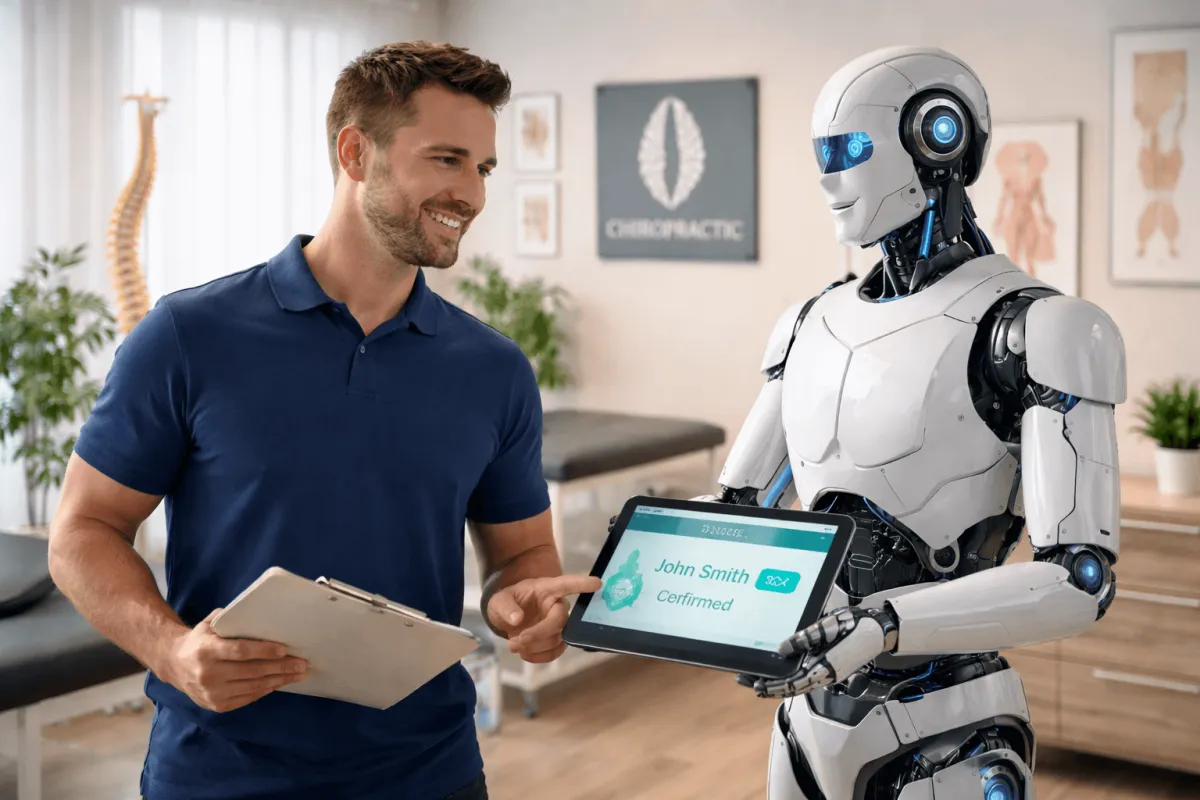
AI Receptionist vs. Answering Services: Which Is Better in 2026?
AI receptionists and traditional answering services differ in capability, cost, and speed. Answering services typically rely on humans to take messages and forward calls later. AI voice agents can complete actions in real time—qualifying leads, booking appointments, and syncing details to your calendar or CRM—while staying available 24/7 with near-instant response times.
A virtual assistant and an AI receptionist can both reduce interruptions, but they solve different parts of the phone and scheduling problem. If you want to understand where each option fits compared to a traditional answering service—especially across home services, medical offices, legal, and professional services—use this cluster hub: AI receptionist vs answering services. It lays out the industry-specific call handling patterns that determine whether you need automation, human coverage, or a hybrid.
Key Takeaways: AI Receptionist vs. Answering Services

If you’re comparing options, start with this full guide to AI receptionists for service businesses to get a clear baseline for what modern voice agents can (and can’t) do.
What is the fundamental difference between an AI receptionist and an answering service?
Here’s what most service business owners don’t realize: a traditional answering service is essentially a professional message-taking system, whereas a modern AI receptionist is a form of digital labor. While a human answering service relies on an operator to write notes and page you, an AI receptionist uses Natural Language Processing (NLP) to understand, interpret, and respond to human speech in real time.
What we’ve learned from service businesses is that “taking a message” often isn’t enough anymore. In 2026, callers want progress on the first call. AI doesn’t just record details—it can answer company-specific questions, guide the caller through a short intake, and complete actions like scheduling or updating records during the conversation. If you want a quick way to see why callers abandon old systems, this breakdown of why voicemail is losing bookings explains the behavior shift.
Why is 24/7 availability crucial for Colorado Springs service businesses?
If your phones aren’t answered 24/7, you’re losing booked jobs. Homeowners often research repairs in the evening, on weekends, or right after something breaks. If they reach a service that can only promise a “call back tomorrow,” many will hang up and call the next company in the results.
The impact of being always available:
Capture panic calls: 2 AM pipe bursts and Sunday roof leaks don’t wait for business hours.
No wait time: AI can answer immediately, which reduces drop-offs and improves the customer experience.
Consistent coverage: Nights, weekends, and holidays are covered without overtime or staffing gaps.
Comparing the costs of AI receptionists and live answering services
Budgets are tight for small businesses, and live answering services often hide costs behind credits, tiers, or per-minute overages. AI pricing is typically more predictable: a base monthly license plus low usage rates, which is why many businesses treat it like a fractional hire rather than a staffing decision.
Operational cost reality check:
AI receptionist: often works out to under $1/hour when you spread a monthly plan across 720 hours.
Answering service: can look “reasonable” up front, then climb with after-hours, overflow, and talk-time minutes.
Labor savings: automation can reduce operational overhead, especially when it replaces after-hours coverage and repetitive call handling.
Why do AI agents book better than traditional message-taking services?
A message is a promise of a future conversation. A booked appointment is a secured commitment. Traditional services introduce friction by requiring a callback, which creates delays, phone tag, and drop-off. AI reduces that friction by connecting to scheduling and completing the booking while the caller is still engaged.
The booking advantage:
Real-time scheduling: checks availability and prevents double-bookings.
Instant confirmation: can send confirmation texts or links while the call is still happening.
Self-serve changes: callers can reschedule or cancel by voice or text, and the calendar updates automatically.
How does AI-powered lead qualification save business owners time?
Not all calls are equal. Traditional answering services tend to pass everything through—tire-kickers, wrong numbers, price shoppers, and spam—because their job is to relay messages. AI can filter in real time, using your rules, your service area, and your intake criteria to decide what happens next.
How qualification typically works:
Custom questions: tailored to your service type (urgency, location, job type, timeline, budget signals).
Prioritization: urgent and high-value calls can be escalated while low-fit calls are handled politely.
Noise reduction: spam/robocall handling reduces interruptions for you and your crew.
If you’re planning to publish a deeper explainer, you already have the future page ready: how AI receptionists qualify leads automatically can act as the “next step” for readers who want to see the logic behind the questions.
The role of CRM and calendar integration in 2026 operations
The future of service business operations is seamless data flow. Traditional services might text or email you a note. AI can log the contact, tag the job type, store the transcript/summary, and sync everything into your tools—so your team isn’t retyping details or chasing context.
What integration changes:
Automatic entry: caller info and summaries can be logged into your CRM or pipeline.
Smarter routing: VIP calls, emergencies, or specific job types can route to the right person.
Better follow-up: transcripts and summaries make it easier to call back prepared.
How does AI sound to customers compared to human operators?
A common misconception is that AI sounds robotic. Modern voice systems can sound natural, handle interruptions, and keep the tone consistent. That consistency matters: callers judge your professionalism on the first 10 seconds of the call.
Voice quality benefits:
Natural dialogue: handles pauses, tangents, and normal speech patterns.
Brand consistency: the greeting and tone don’t change based on mood or workload.
Language accessibility: bilingual handling can improve coverage without extra staffing.
If you’re building a library of examples and scripts, these AI receptionist scripts can help readers picture what “natural” actually sounds like in real calls.
What are the limitations of AI vs. traditional human services?
AI is a major upgrade for routine calls, scheduling, qualification, and consistency—but it isn’t a replacement for human empathy in every edge case. Highly emotional calls or unusual scenarios may require a live person, and the best systems are designed for escalation rather than pretending they can handle everything.
How to balance both:
Smart forwarding: urgent or complex calls can be bridged to a team member.
Hybrid coverage: AI handles the predictable 90%; humans handle nuance and exceptions.
Clear escalation rules: prevents dead ends and protects the caller experience.
If you want to show proof beyond theory, use our AI ROI calculator to see how much you loose from missed calls.
Call-to-action (kept simple and relevant)
If you want to see whether AI or a live service makes more sense for your call volume, booking flow, and after-hours needs, book a strategy session here. If you prefer to talk first, you can also call (888) 898-3151.
FAQs
Can an AI receptionist use my current answering service as backup?
Yes. Many businesses run a hybrid setup where AI answers first and routes edge-case calls to a live service or team member. This approach keeps response speed high while still providing human coverage for sensitive scenarios. The key is defining clear routing rules so calls don’t loop and high-intent leads aren’t delayed.
How do I prevent callers from feeling “tricked” if they realize it’s AI?
Most issues come from tone and scripting, not the fact that it’s AI. A natural greeting, clear help-first language, and fast problem resolution reduce skepticism. If you want transparency, you can disclose it politely after the greeting. What matters most is that the caller gets an immediate, useful outcome.
Does AI reduce no-shows compared to an answering service?
It often can, because AI can send instant confirmations, reminders, and reschedule links immediately after booking—without waiting for staff to follow up. Faster confirmation reduces uncertainty, and automated reminders reduce forgetfulness. The best results come when booking, confirmation, and reminders are all connected to the same calendar logic.
What happens during a call spike from ads, storms, or seasonal rush?
Traditional answering services are constrained by staffing and can create hold times. AI can handle multiple callers at once, which reduces busy signals and abandoned calls. During spikes, the key is defining intake priorities (urgent vs. routine), and deciding what the AI should book, what it should triage, and what it should escalate.
Is an answering service still useful in 2026 for any businesses?
Yes—some businesses prefer a human touch for complex, emotionally sensitive calls, or they want a brand voice that’s fully human all the time. The tradeoff is speed, cost, and consistency. For many service businesses, AI handles the majority of calls better, while a small amount of human coverage is reserved for exceptions.
If you want, I can also generate the FAQ schema JSON-LD for these five FAQs (using your site structure and schema IDs) in the exact format you’re pasting into your pages.
