What Is an AI Receptionist and How Does It Work for Service Businesses?
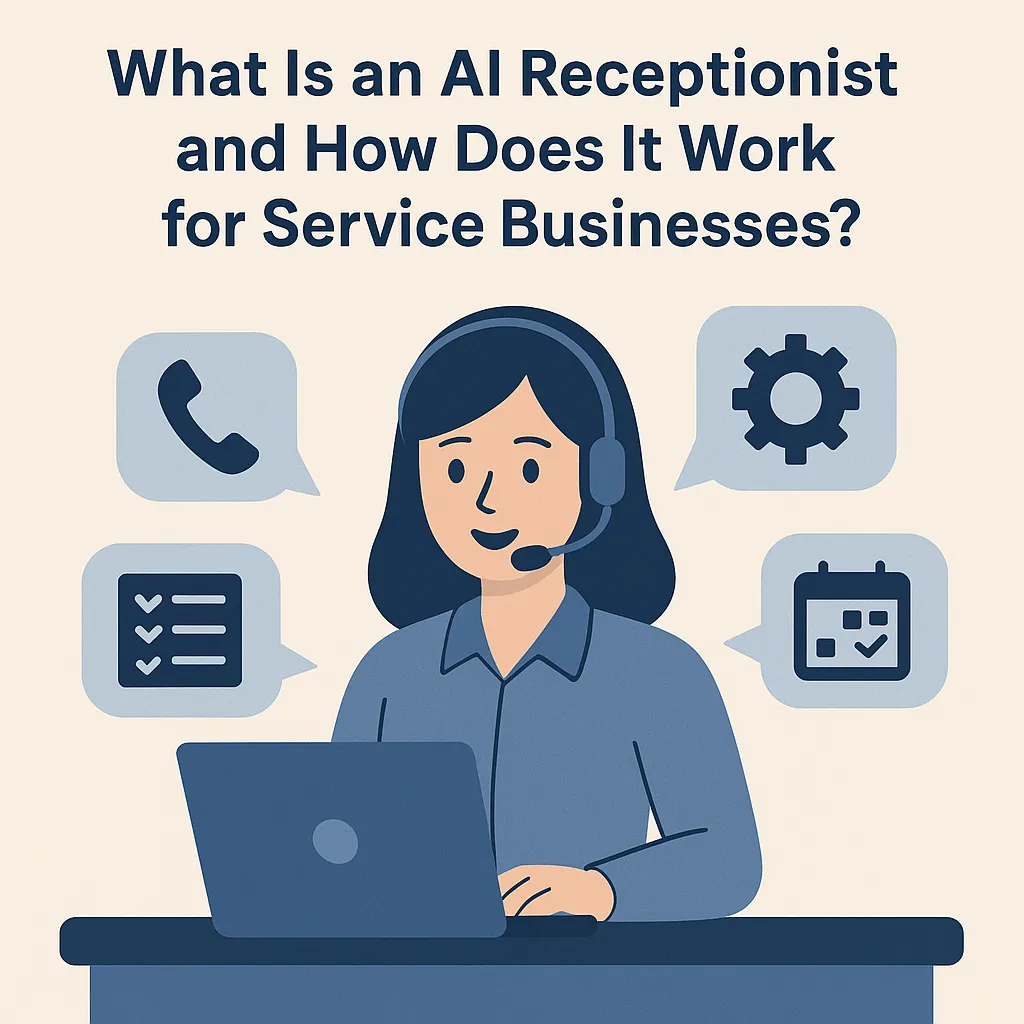
An AI receptionist is a virtual assistant that answers calls, qualifies leads, and manages scheduling for service businesses using natural, conversational AI. This article explains how AI receptionists work, the technology behind them, and how they support daily operations without replacing human staff.
Running a service business often means juggling multiple time-consuming reception tasks, such as answering constant phone calls, scheduling appointments, and ensuring every customer interaction is handled professionally. An AI receptionist is a virtual assistant that uses artificial intelligence to automate many of these responsibilities, handling tasks traditionally performed by a human receptionist.
An AI receptionist functions as an always-available call answering system that helps keep a business running smoothly. It is not designed to replace human receptionists entirely, but to support them by managing repetitive inquiries and after-hours calls, allowing staff to focus on more complex or high-value interactions.
For a broader overview, see our complete guide to AI receptionist for service businesses.
What you need to know before signing up for AI Receptionist for your business.
The Technology Behind an AI Receptionist
AI receptionists operate through advanced software designed to understand and respond to customer interactions across phone and messaging channels, without requiring direct human involvement.
Core Technology
AI receptionists use advanced voice AI technology combined with Natural Language Processing (NLP) and machine learning. This allows the system to understand spoken language, interpret intent, and respond in a natural, conversational way.
Interaction Style
The technology supports realistic conversations that include pauses, interruptions, and conversational flow, helping interactions feel less robotic and more human.
Functionality
During a conversation, the AI can interpret customer questions, access company data such as FAQs or service details, and generate accurate responses. It can also complete actions directly, such as booking appointments or processing simple requests.
Core Functions of an AI Receptionist
An AI receptionist integrates directly with a business’s phone system and performs several key functions that support lead conversion and continuous operations.
24/7 Availability and Call Handling
AI receptionists operate around the clock, including nights, weekends, and holidays. They answer inbound and outbound calls, gather caller information, and provide instant responses to common questions such as business hours or service availability, ensuring no calls are missed.
Lead Qualification and Smart Routing
During calls, the AI receptionist qualifies leads using predefined criteria and custom questions provided by the business owner. This helps filter out low-intent inquiries and prioritize serious prospects.
When a call requires human involvement, the AI can use smart call routing to instantly transfer urgent or high-value calls to a manager or designated team member, ensuring important conversations reach the right person.
Appointment and Schedule Management
Scheduling is one of the primary functions of an AI receptionist.
Real-time booking: The AI connects directly to the business calendar to book appointments instantly and prevent double-bookings.
Rescheduling and cancellations: Customers can request changes by voice or text, and the system updates the calendar automatically.
Automated follow-ups: The AI sends confirmations, reminders, and links to help reduce no-shows and keep leads engaged.
If you’re new to the concept and want the basics before comparing tools or pricing, this page on what an AI receptionist is explains how it answers calls instantly, asks the right intake questions, and books appointments automatically—without putting callers on hold. It’s a helpful overview for service business owners and office managers who want fewer missed calls, faster follow-up, and a consistent phone experience even after hours.
Data Integration and Multi-Channel Communication
To streamline operations, AI receptionists integrate with existing business systems.
CRM and booking integration: Caller details are automatically saved or updated in CRM and booking software, eliminating manual data entry.
Text messaging: The AI can send links, forms, booking pages, menus, and reminders during or after calls.
Call summaries: A detailed summary of each call, including caller information and conversation outcomes, is sent to the business owner for easy review.
Multilingual support: Many AI receptionists support multiple languages, allowing businesses to serve a wider and more diverse customer base.
Who Benefits from an AI Receptionist?
AI receptionists are especially useful for businesses that rely on phone leads and appointments but struggle with high call volume or limited staff availability.
Home Service Businesses
Roofers, HVAC professionals, plumbers, and painters often miss high-value calls while working on job sites. An AI receptionist ensures every call is answered and appointments are booked automatically.
Professional and Office-Based Services
Medical offices, tax professionals, and similar service providers use AI receptionists to manage administrative tasks, qualify leads, and route calls efficiently.
Small Businesses
For small business owners with limited staff, an AI receptionist reduces administrative workload while providing consistent, professional phone coverage without the cost of a full-time employee.
For professional services where intake quality and privacy matter, here’s how it applies to attorneys: AI for Law Firms. In a law firm, the AI receptionist can handle first-contact intake, screen for urgency, route to the right attorney, and create a clean record of what the caller said—without relying on a busy front desk to capture every detail.
For contractors who miss calls while working in the field, the “always-on” benefit is huge. Roofers can use the AI to book inspections, qualify storm-damage callers, and route emergencies during evenings and weekends—see AI Receptionist for Roofers. This is especially helpful during storm season when call volume spikes and hold times quietly kill your conversion rate.
For plumbing, speed is everything. When someone has a leak, backup, or no hot water, they don’t leave voicemails—they call the next company. A plumbing-focused AI receptionist can tag emergencies, bridge urgent calls to your on-call tech, and still book routine maintenance into your schedule—see AI Receptionist for Plumbers. It’s one of the fastest ways to reduce “missed-call losses” without adding payroll.
Bottom line: an AI receptionist works best when your business depends on fast response, consistent intake, and booking efficiency. If you’re paying for leads (ads, SEO, referrals, Google Business Profile) but losing calls to missed connections, slow callbacks, or after-hours gaps, AI is often the simplest “revenue recovery” system you can install.
Potential Challenges and Limitations
While AI receptionists provide significant automation benefits, they do have limitations.
Emotional or complex conversations: Highly emotional or unusual requests may require a human response.
Human intervention: Complex issues or escalations may need to be transferred to staff for proper resolution.
Accuracy during early use: Initial performance may vary, highlighting the importance of ongoing training and refinement using real interactions.
Many business owners also compare AI solutions with traditional staff, which we explore in detail in our article on AI receptionist vs human receptionist.
Frequently Asked Questions
1) What is an AI receptionist, in simple terms?
An AI receptionist is a 24/7 assistant that answers your phone, asks the right questions, and helps book appointments—so you don’t lose leads when you’re busy, driving, or after hours.
2) Will it replace my office staff?
No. Most businesses use it to support their team by covering missed calls, overflow, and after-hours inquiries—so your staff can focus on customers who are already ready to book.
3) Can it book appointments directly into my calendar?
Yes. Your AI receptionist can connect to your calendar to book in real time, prevent double-bookings, and send confirmation + reminder texts to reduce no-shows.
4) What if a caller has an urgent or complicated request?
It can route urgent calls to the right person (owner, manager, on-call tech) and handle common questions automatically. If the situation needs a human, it escalates—fast.
5) Is an AI receptionist worth it for a small business?
If you miss even a few calls a week, it usually pays for itself quickly. One booked job can often cover the monthly cost—especially for home services, legal intake, and appointment-based businesses.
Stop letting missed calls turn into missed revenue. If you want every lead answered fast, qualified, and booked—without hiring more staff—check out our AI Receptionist for Service Businesses and see how it works in real life.
